
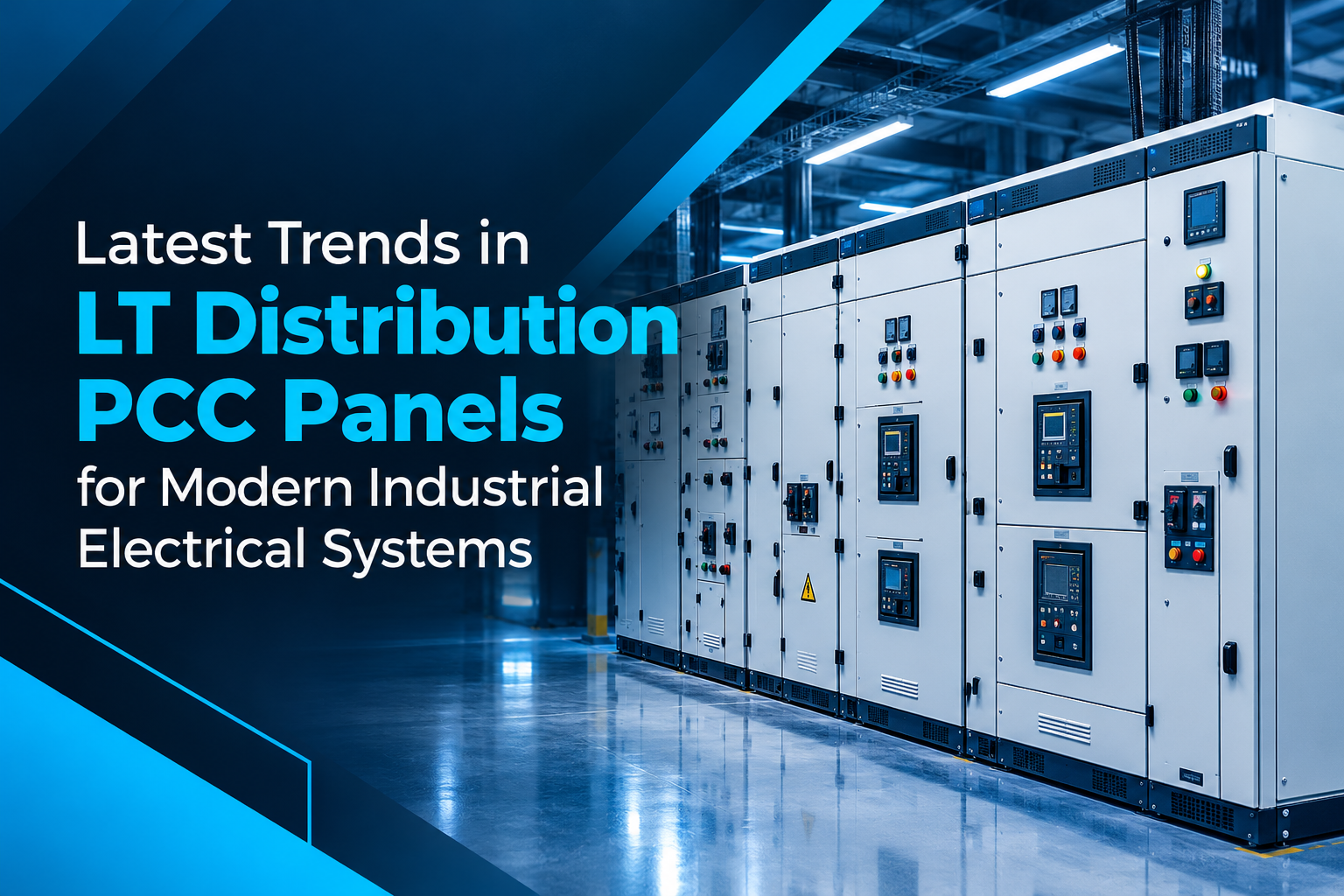
In the current era, it is necessary for industries to have proper distribution of electricity so as to ensure continuous functioning and protection from any damage to their equipment, as well as to reduce downtime.
We, as an LT Distribution PCC Panel Manufacturer such as Inducto Tech, are thriving due to digital monitoring, circuit protection, modularity, and improved energy management.
1. Smart Monitoring and Digital Integration:
The LT PCC panels can feature digital meters and communication-capable devices to obtain data on electricity in real time.
Advantages are:
- Voltage, Current, Frequency, Power Factor, and Energy Consumption Monitoring.
- Detection of abnormal loads and electrical variations.
- Connecting with the SCADA system for centralized monitoring.
The electrical department will be able to study the operational conditions effectively and detect any problems before they create a serious problem.
For larger facilities, this information can also support maintenance planning by helping teams compare normal operating patterns with unusual readings. The usefulness of monitoring depends on correctly selected meters, communication compatibility, and regular review of the recorded data.
2. Advanced Circuit Protection and Safety:
Overloading and electrical failures may cause damage to equipment and stop production. Newer panel boards contain properly rated protection devices, thereby enhancing the safety of the whole system.
Advantages of the modern circuit board:
- Air Circuit Breakers (ACBs): For main incomers and bus couplers in high-current circuits.
- Molded Case Circuit Breakers (MCCBs): For proper outgoing feeders and distribution circuits.
- Protective relays: To detect and take corrective actions against certain electrical conditions.
Protection coordination is equally important. Properly selected and configured devices help isolate faulty circuits without unnecessarily disconnecting the entire facility.
Protection settings should be selected according to the installation’s load profile and prospective fault levels, then verified during commissioning. This helps reduce avoidable interruptions while maintaining the required level of electrical safety.
3. Modular Design and Space Optimization:
Industrial plants often need flexible electrical infrastructure to accommodate new machinery and increasing loads. Modular LT PCC panel designs help organize components and simplify planned expansion.
When evaluating a panel, consider:
A well-planned layout also makes inspection and troubleshooting easier, particularly where electrical teams need to access components during scheduled maintenance. Any provision for expansion should be checked against the available space and the panel’s rated capacity.
- Adequate space for cable termination and maintenance access.
- Provision for spare feeders and future load requirements.
- Proper ventilation and electrical clearances.
- An organized arrangement of breakers, bus bars, and metering devices.
4. Energy Monitoring and Power Factor Management:
Energy efficiency is an important area for businesses that wish to manage their electricity expenses. Advanced PCC panels are capable of handling energy management using multifunctional meters and energy monitoring at the feeder level. This enables companies to:
- Monitor their energy usage and peak demand.
- Find out which circuits are overloaded and out-of-phase.
- Evaluate power factor and find ways to improve it.
5. Improved Thermal Management and Busbar Design:
The heat produced within the electrical panel may hasten the ageing of the insulation system and create a chance of equipment malfunctioning. In the modern design of the electrical panels, efficient heat dissipation is key.
Some of the factors to consider include:
- Proper sizing of bus bars depending on current and short circuit.
- Electrical connections and cable terminations.
- Ventilation and space between components.
- Regular checks for overheating using infrared scanning.
Industrial benefit: The thermal behavior relies on the whole assembly, consisting of the enclosure, components, load, and environmental temperature.
For this reason, panel selection should account for ambient temperature, ventilation conditions, loading patterns, and the quality of electrical joints. Periodic inspection and tightening in line with the manufacturer’s instructions can help identify developing hot spots early.
6. Standards, Testing, and Customisation:
Every industrial installation has different load requirements and operating conditions. A suitable PCC panel should be designed around the project’s electrical specifications.
Before finalising a panel, verify:
- Rated voltage, current, and short-circuit withstand capability.
- Appropriate IP rating for the installation environment.
- Suitable breaker ratings and protection settings.
- Applicable IEC 61439 requirements and relevant verification documentation.
- Availability of technical drawings and testing records.
Working with an experienced LT Distribution PCC Panel Manufacturer helps ensure that the proposed panel matches the facility’s electrical and operational requirements.
It is also useful to review the single-line diagram, load schedule, site conditions, and expected future additions before approving the final design. Clear documentation helps the project, installation, and maintenance teams work from the same technical requirements.
How to Choose the Right LT Distribution PCC Panel Manufacturer?
Do not judge the manufacturer on cost alone. Consider the manufacturer’s capability to offer you:
- Technical know-how: Design based on loading schedules and fault levels.
- Quality control: Inspection procedures and relevant routine testing.
- Customisation: Panels configured for particular industrial needs.
- Upgradability: Provision for extra feeders and variable power needs.
- Post-purchase services: Assistance with installation, commissioning, and servicing.
Inducto Tech is here to assist you in judging the panel’s suitability and service needs.
Share your application details, load requirements, and installation environment with the technical team so the proposed configuration can be assessed against your project needs.
Conclusion
PCC panels for modern LT distribution systems have all of these aspects, namely, advanced protection, digital metering, energy metering, and flexibility, to fulfill industrial needs. When choosing a proper LT Distribution PCC Panel Manufacturer, consideration must be given to load, fault level, environment, and possible future expansion. The panel solutions offered by Inducto Tech can be used when choosing an industrial electrical installation.
Frequently Asked Questions:
1. What are LT distribution PCC panels meant for?
Distribution of low-voltage electricity to various loads, along with facilities for switching, protection, and monitoring.
2. How do PCC panels differ from MCC panels?
PCC panels distribute electricity, whereas MCC panels control and protect motors.
3. What are the types of protection devices used in LT PCC panels?
Devices such as ACBs, MCCBs, and protective relays are some of the protection devices used in LT distribution PCC panels.
4. What points should I consider before selecting an LT Distribution PCC Panel Manufacturer?
Check design capability, component ratings, applicable standards, testing documentation, customisation, and after-sales support.